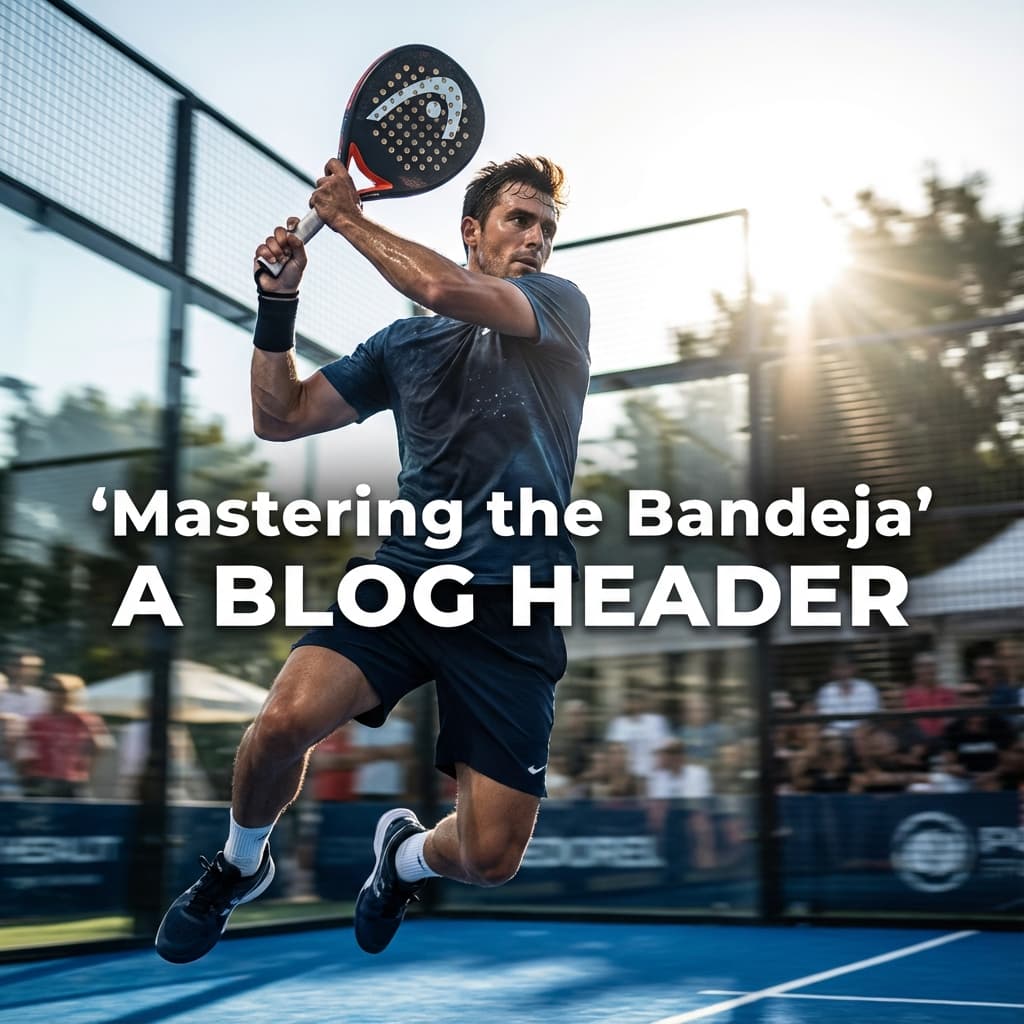
Mastering the Bandeja: A Step-by-Step Guide
The Bandeja is arguably the most unique and important shot in padel. It's not a smash, and it's not a volley – it's something in between. Mastering it is the key to maintaining the net position and neutralizing your opponents' lobs.
What is a Bandeja?
“Bandeja” means “tray” in Spanish. The name comes from the way you hold the racket face open, like a waiter carrying a tray of drinks. The goal isn't to hit a winner (though you can), but to keep the ball low and deep, forcing your opponents to stay back while you regain the net.
Step 1: Preparation
As soon as you see the lob coming, turn your body sideways. Raise your racket head high (above your head) and point your non-dominant hand towards the ball. Your feet should move quickly to get you behind the ball.
Step 2: The Contact Point
Unlike a smash where you hit the ball at its highest point, the bandeja is hit at around eye level or slightly higher (shoulder height). You want to brush the back/bottom of the ball to generate slice (backspin).
Step 3: The Follow Through
After contact, keep your swing compact. You don't need a huge follow-through like in tennis. Think about finishing across your chest. This helps control the depth and placement.
Common Mistakes to Avoid
- Hitting too hard: A bandeja is a control shot. Power often leads to errors or easy rebounds off the back glass.
- Not moving feet: If you are reaching for the ball, you've already lost. Fast feet are essential.
- Wrong contact point: Hitting too high turns it into a weak smash; hitting too low gives the opponents an easy volley.
When to use it?
Use the bandeja when your opponents hit a deep lob that forces you back from the net, but not so deep that you have to let it bounce. It's your “reset” button to keep the offensive position.
Pro Tip
Aim your bandeja into the corners. This forces the opponent to deal with the double walls, which is much harder than a ball coming down the middle.