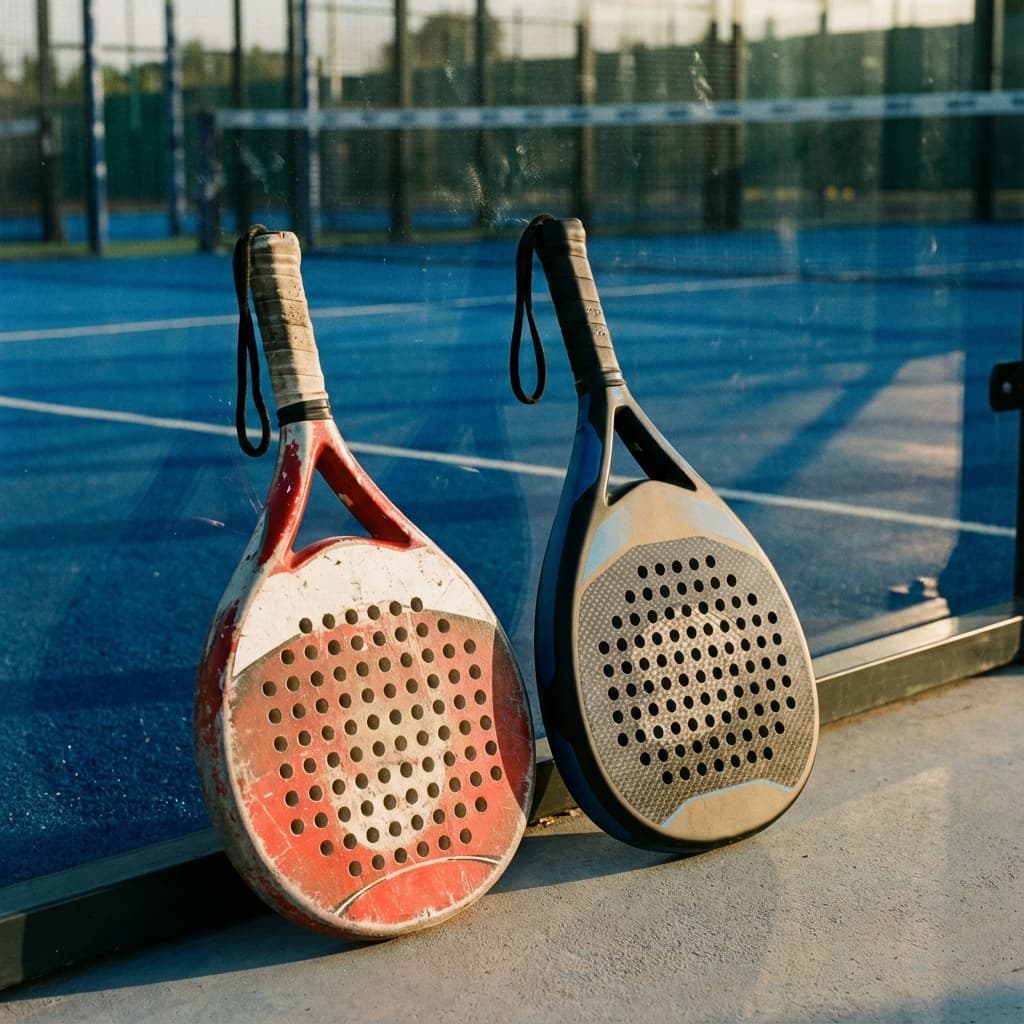
What's the right time to change your first padel racket?
You've been playing for a few months, your bandeja is getting consistent, and you're starting to understand the glass. But suddenly, you feel like something is holding you back. Is it your technique, or is it time to retire your first racket and get something more advanced?
Choosing when to upgrade is a rite of passage for every padel player. Move too soon, and you might struggle with a racket that's too demanding. Wait too long, and you might stall your progress. In this guide, we'll break down the clear signs that it's time to make the switch.
1. Physical Wear and Tear
Before looking at your skills, look at the equipment itself. Padel rackets aren't immortal. The EVA foam inside loses its elasticity over time, especially if you play in very hot or very cold conditions.
- Cracks in the Frame: Even small hairline fractures can compromise the structural integrity.
- Soft Spots: If the face of the racket feels "dead" or softer in some areas than others, the foam has lost its pop.
- Excessive Vibrations: If you suddenly start feeling more vibration in your elbow or wrist, the internal materials might be failing.
2. You Reach the "Power Ceiling"
Most beginner rackets are designed for control and comfort. They are made with softer materials and have a low balance. As you get stronger and your technique improves, you might find that no matter how hard you hit, the ball just doesn't move as fast as you want it to.
If you feel like you're putting in 100% effort but getting 60% output during overheads, it's a sign you might need a racket with a harder surface (carbon fiber) or a higher balance (teardrop shape).
3. Your Defense is Solid, but Your Offense is Lacking
Round rackets are amazing for defense because of their large sweet spot. However, as you move into intermediate play, you'll need more "bite" on your volleys and more leverage on your smashes.
When you start losing points because you can't "finish" the ball, even when you have the perfect opportunity, it's time to consider a more versatile teardrop-shaped racket.
4. The "Tennis Elbow" Warning
Wait, isn't a beginner racket supposed to be safer? Usually, yes. But if you've outgrown a very light racket and are now trying to hit the ball harder, you might be overcompensating with your wrist and elbow.
Sometimes, moving to a slightly heavier, more stable racket can actually help your arm because the racket does more of the work for you.
The Golden Rule
A general rule of thumb: If you're playing 2-3 times a week, a beginner racket will typically last you 6 to 9 months before your skill level starts to exceed the racket's capabilities.
Found your signs? Here's what's next.
If you've recognized these signs, you're officially ready for an upgrade. Check out our curated list of the best intermediate rackets to take your game to the next level.
Read: Top 5 Padel Rackets for Intermediate Players in 2025 →Ready to look for your next racket? Check out ourTop 5 Padel Rackets for Beginners in 2025if you're still in the early stages, or stay tuned for our intermediate guides!